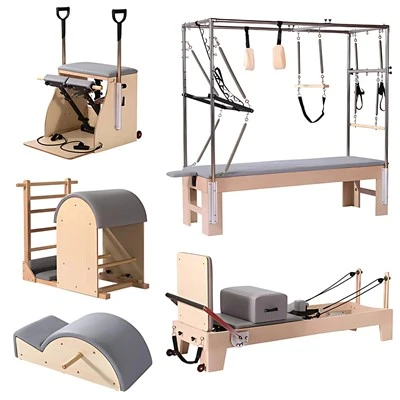
Frame Base: Typically a rectangular frame made of aluminum alloy or hardwood (such as maple), providing rigid support and a track foundation.
Carriage: A platform that moves back and forth along the frame's tracks, supporting the user's body; movement must be smooth and stable, without wobbling.
Spring Resistance System: Connects the carriage to the end of the frame, providing variable linear resistance through combinations of different quantities and colors (e.g., yellow, green, red).
Ropes and Pulley System: Anchored to the carriage and guided by height-adjustable pulleys at the top; the ends feature handles, foot loops, or straps for upper and lower body exercises.
Footbar: A multi-position metal bar mounted at one end of the frame; its angle and height can be adjusted to accommodate leg length and specific exercise requirements.
Headrest and Shoulder Rests: The headrest typically offers multiple height settings; shoulder rests (shoulder pads) support the shoulders during supine pushing exercises and prevent excessive carriage travel.
Gear Bar: Used to adjust the position of the spring hooks, thereby altering initial tension or locking the carriage in place.