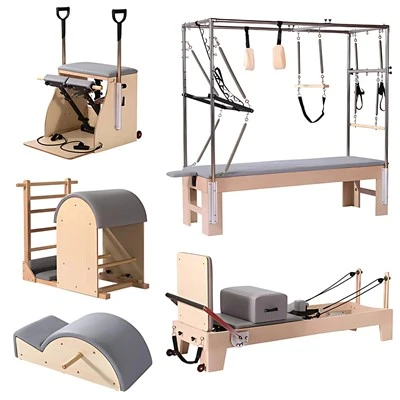

Material Selection & Drying: High-density woods such as North American hard maple are selected, with moisture content controlled at 8%–12%; materials undergo both natural air-drying and kiln-drying to prevent warping and cracking.
Initial Wood Processing: Dual-sided thicknessing using jointers and planers ensures substrate flatness; CNC saws cut components to precise dimensions based on blueprints.
Precision Shaping: CNC machines handle complex curved cuts, mortise-and-tenon joinery, and decorative pattern carving; aluminum alloy components undergo simultaneous drilling and tapping.
Structural Assembly: Key load-bearing points are bonded using mortise-and-tenon joinery combined with specialized wood glue; assemblies are clamped and cured for at least 24 hours, followed by sanding to remove burrs and filling of any gaps.
Upholstery: PU or leather fabrics are cut and sewn over high-density foam padding; fabrics are stretched taut and stapled securely to the wooden frame.
Mechanical Final Assembly: Installation of silent roller slide systems, adjustment levers, and spring sets of varying resistance (typically 3–5 adjustable springs); calibration of sliding smoothness and resistance balance.
Quality Control & Packaging: Load-bearing tests, sliding noise checks, and stability verification are performed; approved products receive dust-proof packaging.
Key Process Details
Joining Technology: A combination of traditional mortise-and-tenon joinery and modern structural adhesive ensures mechanical strength while avoiding the rigidity and noise associated with purely metal connections.
Surface Treatment: Multi-stage sanding (typically progressing from 120-grit to over 600-grit) followed by the application of eco-friendly hard-wax oil or matte lacquer, balancing a tactile, non-slip finish with aesthetic appeal.
Resistance System: Springs undergo fatigue testing to ensure tension loss remains within standard limits after thousands of stretches; slide rails receive noise-dampening treatment to deliver a smooth, "window-glide" experience. Material Properties: With a flexural strength exceeding 120 MPa, a fine grain, and rapid resilience, maple is the preferred choice for high-end models, replacing pine-which is prone to warping-and layered engineered wood.