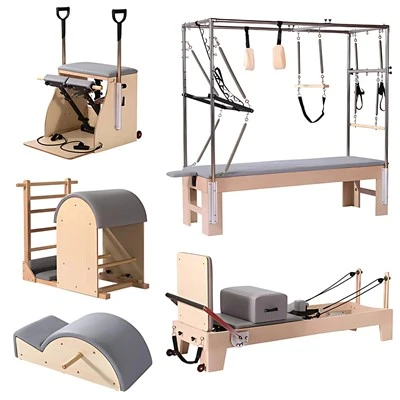
The Pilates reformer must be constructed from sturdy, durable materials capable of withstanding significant weight and pressure.
Dimensions are strictly defined; the length is approximately 200 cm, and the width typically ranges from 60 to 70 cm to ensure adequate space for use. The height should be between 40 and 50 cm to facilitate easy access and operation. The bed surface material must be flexible and conform to the body's contours. The frame is generally made of metal to ensure stability and resistance to deformation. The surface must be smooth and free of burrs to prevent scratches. Springs must provide appropriate elasticity to accommodate various training intensities, with an extension range generally between 5 and 10 cm.
The footbar design should be ergonomic, allowing for comfortable and effective pushing. The footbar surface requires an anti-slip finish to prevent slipping during exercise. Handles should be easy to grip, with a thickness designed for a natural hold; the material should be skin-friendly to avoid discomfort during prolonged use. The color scheme should be simple and understated so as not to distract the user's visual focus. Assembly must be secure, with all components tightly connected and free of looseness. Before training, the reformer's overall stability should be checked via a shake test. Users weighing over 150 kg require a heavy-duty model. Spring elasticity should be checked regularly, with adjustments or replacements made promptly if changes occur. Clean the reformer with a soft, damp cloth to avoid damage.
Avoid contact with sharp objects to prevent scratching the surface. The reformer should be placed in a dry, well-ventilated area to prevent moisture damage to components. Movement ranges during training should be controlled appropriately based on the reformer's specifications. First-time users should familiarize themselves with the functions and operation of all components. When using the reformer under an instructor's guidance, ensure techniques are accurate. Users should wear appropriate sportswear that allows for ease of movement. Stop using the reformer immediately if any discomfort arises during training. Maintenance must be performed by professionals to ensure safety; damaged parts should be replaced promptly to maintain proper functionality. Upgrades and replacements should take into account technological advancements and user feedback.