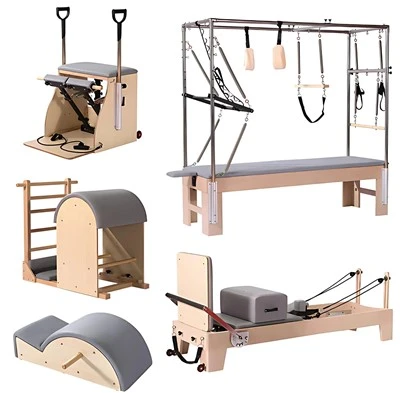
Dynamic Unstable Surface: The carriage slides freely along the rails, disrupting static support and forcing the transverse abdominis, multifidus, and pelvic floor muscles to contract continuously to maintain a neutral spine and proper movement trajectory, thereby preventing compensatory movements.
Bidirectional Linear Resistance: Springs provide adjustable concentric (shortening) and eccentric (lengthening) resistance; varying spring colors and quantities allows for load customization, enabling progressive training that ranges from rehabilitation support to high-intensity challenges.
Leverage and Torque Adjustment: Adjustments to the footbar height, rope angles, and body pivot points alter lever arm lengths, allowing for precise control over the magnitude and direction of force applied to specific muscle groups.